

Eight out of ten people read a headline. Only two of them read the rest.
That statistic, from Copyblogger's research, is the most important thing you need to understand about email copywriting — because every element of your email faces the same brutal odds. Your subject line competes against hundreds of others for attention. Your opening line competes against the reader's impulse to close the email. Your body copy competes against every distraction on the device they are reading it on. Your call to action competes against the inertia of not doing anything.
Email copywriting is the discipline of winning every one of those competitions — consistently, at scale, with words.
The returns justify the investment. Top-performing brands are generating an average ROI of up to $45 for every $1 spent on email marketing. Benefit-focused copy outperforms feature-focused copy by 3x. Personalized copy increases conversions by 42%. The AIDA formula improves response rates by 25%. Automated campaigns demonstrate 2,361% higher conversion rates than traditional campaigns.
These are not theoretical improvements from marginal tweaks. They are the documented performance gaps between email copy written with craft and intention versus email copy written as an afterthought.
This guide teaches you the craft. You will find the psychology of persuasion applied to email, five proven copywriting frameworks, the anatomy of every email element from subject line to signature, eight before/after rewrites across different email types, the AI-assisted workflow top teams use in 2026, the metrics dashboard that tells you what is working, and the answers to every question you have about writing email that actually converts.
Why Email Copywriting Has Changed in 2026
The fundamentals of persuasion have not changed. Human psychology is the same as it was in 1950. What has changed is the context in which email copywriting operates — and that context demands a different approach.
The 2026 Email Copywriting Landscape
Metric 2026 Data Source Daily emails sent and received globally 408.2 billion (projected) Snov.io / Statista Average email marketing ROI $10–$45 per $1 spent Snov.io / Maropost Benefit-focused vs feature-focused copy Benefit wins by 3x Gitnux Copywriting Statistics 2026 Personalized copy conversion lift +42% Gitnux Feb 2026 Personalized CTA vs generic CTA 220% more conversions Codeless / HubSpot Power words in headlines +20% CTR Gitnux Feb 2026 A/B testing headlines +40% CTR improvement Wifitalents Feb 2026 Mobile email opens (global) 55%+ of all opens Maropost / Genesys 2025 94% of readers abandon unclear text Clarity is non-negotiable Gitnux Feb 2026 Turning off open tracking 2x higher reply rates Snov.io
The 3 Biggest Email Copywriting Shifts in 2026
Shift 1: AI has commoditized average copy. The companies that fired their copywriting teams and replaced them with AI tools between 2023 and 2025 are now, in many cases, quietly rehiring. Their conversion rates dropped. Their copy became indistinguishable from competitors. Their brand voice flattened into the same AI-generated tone that every other brand was producing. The implication: in 2026, average copy is free. Strategic, differentiated, genuinely human copy is worth more than ever.
Shift 2: Mobile has become the primary reading context. In 2025, mobile devices accounted for 55%+ of all email opens globally. Every word you write, every sentence length you choose, every CTA you place is now evaluated first on a 6-inch screen with a thumb ready to scroll past or delete. Mobile-first copywriting is not a preference — it is an imperative.
Shift 3: Clarity beats cleverness. 94% of readers abandon unclear text. In an era of information overload, the email that wins is not the most creative or the most sophisticated — it is the clearest. The reader who has to work to understand your value proposition will not work. They will leave. Clarity is the primary virtue of email copy in 2026.
The Psychology Behind Email Copy That Converts
Before frameworks and formulas, you need to understand the psychological principles that make people read, engage, and respond to email copy. These principles are not tricks — they are documented features of human cognition that determine why some words move people and others do not.
Principle 1: Benefits Over Features (3x Conversion Lift)
Features describe what your product does. Benefits describe what changes for the reader when they use it. Benefit-focused copy outperforms feature-focused copy by 3x — and the gap is explained by a fundamental psychological truth: people do not buy products. They buy outcomes. They buy the version of themselves that is better, faster, richer, safer, or more respected after using the product.
Feature: "Our platform uses AI-powered multi-inbox rotation." Benefit: "Your cold emails reach the inbox instead of spam — and stay there at scale."
The reader does not care about the mechanism. They care about the result.
Principle 2: The Curse of Knowledge
One of the most damaging copywriting mistakes is writing for someone who understands your product as well as you do. The curse of knowledge is the difficulty experts have imagining what it is like not to know something they know.
In email copy, this produces jargon-heavy, assumption-laden messages that make perfect sense to the sender and no sense to the recipient. The antidote: write for the reader's vocabulary, not yours. Use the exact language your customers use to describe their problem — not the language your product team uses to describe the solution.
Principle 3: Social Proof and Credibility (34% Conversion Lift)
Testimonials in copy lift conversions by 34%. Using social proof (industry logos) can increase conversion by 400%. People follow the behavior of others — especially others they perceive as similar to themselves. In email copy, social proof works through: specific customer names, specific results with numbers, recognizable company logos, and peer-language ("teams like yours," "companies at your stage").
The more specific the social proof and the more closely it mirrors the reader's own situation, the more powerful it is.
Principle 4: Scarcity and Urgency (332% Conversion Lift)
Urgency words like "now" increase sales by 332%. The psychological mechanism is loss aversion — people are more motivated by the prospect of losing something than by the prospect of gaining something equivalent. Urgency creates a time dimension to that loss: if you don't act now, the opportunity disappears.
Critical warning: urgency only works when it is genuine. Manufactured urgency — fake countdown timers, false scarcity claims — is immediately detectable by modern readers and destroys trust faster than almost any other copywriting tactic.
Principle 5: The Power of "You"
Using "you" and "your" in copy increases engagement by addressing the reader directly. The word "you" is one of the most powerful words in the English language for email copy — it shifts the subject from the sender to the recipient, activating the reader's self-interest and making every sentence about them rather than about you.
Audit your email draft: count every "I," "we," and "our" versus every "you" and "your." The ratio should be at least 3:1 in favor of the reader. If it's inverted, you are writing about yourself — and the reader will stop reading.
Principle 6: Curiosity and the Open Loop
The brain seeks closure on incomplete patterns. A subject line that creates a relevant question, an opening line that implies an interesting story, a sentence that starts a thought and defers its completion — all of these activate the curiosity drive and compel continued reading.
Adding a sense of mystery or a "cliffhanger" in email copy can boost clicks by 25%. Use this deliberately: pose a question your email answers, start a story that the CTA completes, hint at an insight that the linked content reveals.
The 5 Essential Email Copywriting Frameworks
Frameworks are thinking tools — not rigid templates. They give you a proven structure to start from, which you then adapt with your own research, specificity, and voice.
Framework 1: AIDA (Attention → Interest → Desire → Action)
The oldest and most battle-tested copywriting framework. The AIDA formula improves response rates by 25%.
Stage Goal Email Application Attention Stop the scroll Subject line + opening line Interest Keep them reading Relevant context + problem identification Desire Make them want the outcome Benefits + social proof + emotional resonance Action Tell them what to do next Single, clear, low-friction CTA
Example (cold email):
Attention: "{{Company}}'s SDR ramp timeline" ← subject line
Interest: "Saw you're hiring four AEs right now — which usually means pipeline targets are going to be heavy before the new cohort is fully productive." ← problem they recognize
Desire: "We helped Gong cut time-to-first-deal from 4.5 months to 6 weeks — same headcount, completely different ramp system." ← outcome they want
Action: "Worth 15 minutes to see if it applies to {{Company}}?" ← single soft ask
Framework 2: PAS (Problem → Agitate → Solve)
PAS drives urgency by making the problem feel more painful before introducing the solution.
Stage Goal How to Write It Problem Name a specific, real pain State the problem in the reader's own language Agitate Intensify the pain Describe the downstream consequences of leaving it unsolved Solve Position your solution Brief, direct: "Here's how we fix it"
Example:
Problem: "Your SDRs are booking meetings but your pipeline quality is declining."
Agitate: "When activity metrics look fine but revenue metrics don't, it's almost always a targeting and sequencing problem upstream — and it compounds every quarter you leave it."
Solve: "We fix this specifically — not with more volume, but with precision targeting and sequence structure that converts better from the same list."
Framework 3: FAB (Features → Advantages → Benefits)
FAB bridges the gap between what your product does and why the reader should care.
Stage What It Says Example Feature What it is / what it does "Multi-inbox rotation across warmed domains" Advantage Why that feature is better than the alternative "Unlike single-inbox sending, this prevents reputation damage at scale" Benefit What changes for the reader "Your emails keep reaching the inbox as you scale — no deliverability cliff"
FAB is most useful for marketing emails where you need to explain product capabilities without losing the reader's self-interest.
Framework 4: Before → After → Bridge
One of the most emotionally resonant frameworks because it paints a vivid picture of transformation.
Before: Where the reader is now (the painful current state)
After: Where they want to be (the desired future state)
Bridge: How your product gets them from one to the other
Example:
Before: "Right now, your outbound is generating activity but not pipeline. SDRs are busy. Meetings are getting booked. But the demos aren't converting and your cost-per-opportunity keeps climbing."
After: "Imagine a quarter where every meeting your SDRs book comes from an account that matches your ICP perfectly — where the conversion from demo to opportunity runs at 45% because the targeting was right from the start."
Bridge: "That is the system we build. Here's how one team did it in 90 days."
Framework 5: The PASTOR Framework (Advanced)
PASTOR is a more sophisticated framework for longer-form email sequences:
P — Problem: Identify the core problem
A — Amplify: Make the stakes of inaction clear
S — Story/Solution: Tell a relevant story or present the solution
T — Transformation: Show the transformation your solution enables
O — Offer: Present your specific offer
R — Response: Ask for a specific action
PASTOR is most appropriate for email sequences (newsletters, nurture campaigns, longer sales sequences) rather than individual cold emails, where brevity is paramount.
The Anatomy of Every Email Element
The Subject Line: Your Most Important Asset
Strategic copywriting can increase email open rates by up to 50%. The subject line is where that 50% lives — because without the open, nothing else matters.
What the data says about subject lines:
Headlines with 6–13 words attract the highest and most consistent traffic.
Subject lines with numbers boost open rates by 20%.
Keep subject lines 25–50 characters so they don't get cut off on mobile screens.
A/B testing headlines can result in a 40% increase in click-through rates.
The 6 subject line formats that consistently work:
Format Example Why It Works Curiosity gap "The thing most SDR managers miss" Creates open loop the brain wants to close Number + benefit "3 things killing your reply rate" Specific, promises discrete value Personalized trigger "{{Company}}'s Q2 pipeline — a thought" Shows research; creates relevance Question "Is your outbound actually working?" Invites self-reflection; low commitment Counterintuitive statement "Why more emails means fewer replies" Challenges assumption; creates dissonance Ultra-short "Quick thought" / "{{First Name}}" Pattern interrupt; feels personal
For 60 proven subject line examples with open rate data across every category, read our cold email subject lines guide.
The Opening Line: Keep Them Reading
8 out of 10 people will read headline copy, but only 2 out of 10 will read the rest. The opening line is what makes your email one of the 2 rather than the 8.
The opening line must pass one test: does it give the reader a compelling reason to read the next sentence? If it starts with "I hope this email finds you well," "My name is," or "I'm reaching out because," it fails that test immediately.
Opening lines that work:
Specific, researched observation about the recipient
A counterintuitive statement that challenges their assumption
A relevant question they immediately have an opinion on
A short, vivid story that puts them in a recognizable situation
Opening lines that fail:
Generic greetings and pleasantries
Introductions about the sender
Vague compliments without specificity
Statements about what the email is going to do ("I'm writing to...")
The Body Copy: Value, Credibility, Clarity
The body of your email must accomplish three things in as few words as possible:
1. Establish relevance: Connect your message to something the reader actually cares about. This means either referencing a specific pain they have, a goal they are pursuing, or a situation they are in — not describing your product's features.
2. Build credibility: One specific proof point beats five vague claims every time. Name a real customer. Name a real result. Name a real timeframe. Testimonials in copy lift conversions by 34% — and the more similar the proof point is to the reader's own situation, the stronger the lift.
3. Create desire without overselling: The email body should leave the reader wanting more — not feeling like they have already received the full pitch. Strategic incompleteness creates the pull that makes people click or reply.
Length guidance:
Cold email body: 50–100 words
Marketing email body: 150–300 words for most campaigns
Newsletter: 300–800 words depending on content depth
Nurture sequence: 200–400 words per email
73% of people skip reading the full content and prefer to read short copies. Write for the scanner, not the careful reader. Short paragraphs (2–3 sentences max). One idea per paragraph. White space is your friend.
The Call to Action: The Moment of Decision
Using a personalized call to action in your copy is 220% more effective than not using one. Changing a single word in a call to action can increase CTR by 16%.
The CTA principles that drive action:
One CTA per email. Multiple CTAs create decision paralysis. Statistics show that the conversion rates of your landing page can be seriously affected if you have more than a single offer. The same applies to email: one email, one ask.
First-person CTAs outperform second-person. Unbounce's famous test: switching from "Start your free 30-day trial" to "Start my free 30-day trial" increased CTR by 90%. The first-person phrasing activates the reader's ownership of the decision.
Action verbs, not passive phrasing. "Download the guide" beats "The guide is available here." "Book your call" beats "A call can be scheduled at your convenience."
Reduce friction, not value. The CTA should ask for the smallest next step that moves the relationship forward. For cold email: "Worth 15 minutes?" For marketing email: "Get the free guide." For nurture email: "Read the full case study."
The Signature: Professional and Minimal
Your email signature should be clean, professional, and short. Name, title, company, website, physical address (legally required for CAN-SPAM). No banners. No social icons. No promotional taglines. The signature is identification, not advertising space.
8 Before/After Email Copywriting Rewrites
The fastest way to learn email copywriting is to see the transformation from weak to strong. Here are 8 rewrites across different email types.
Rewrite 1: Cold Email — The Feature Dump to Outcome-Focused
❌ Before (feature-heavy, 187 words):
Subject: Improve your sales pipeline with our platform!
Hi Sarah,
I hope this email finds you well. My name is James and I'm the Head of Sales at OutreachPro. Our platform is an AI-powered sales automation tool that features multi-inbox rotation, advanced personalization capabilities, automated sequence management, real-time analytics dashboards, CRM integration with Salesforce and HubSpot, LinkedIn automation, and built-in email warming.
We have helped hundreds of companies across various industries achieve amazing results with our award-winning platform. Our customers have seen significant improvements in their outbound metrics.
I would love to schedule a 45-minute product demonstration so I can walk you through all of our amazing features and show you how OutreachPro can transform your sales process.
Please let me know your availability for next week!
✅ After (outcome-focused, 72 words):
Subject: {{Company}}'s outbound numbers
Hi Sarah,
Your SDRs are probably booking meetings — but are those meetings converting downstream? That gap between activity and pipeline quality is the most common problem we see at Series B companies scaling AEs.
We fixed it for Clearbit — positive reply rate jumped from 2.1% to 9.4% in one quarter without adding headcount.
Worth 15 minutes to run the same diagnostic on {{Company}}?
James
Rewrite 2: Marketing Email — The Newsletter Nobody Opens
❌ Before (company-centric, 164 words):
Subject: Company Update — March 2026
Hi [Name],
We hope you're having a wonderful month! We wanted to share some exciting updates from the team here at Acme.
This month, we launched our new dashboard feature which allows users to view their analytics in a more streamlined way. We also attended the SaaStr conference where our CEO gave a talk about the future of B2B sales. Additionally, we published three new blog posts on our website that you might find interesting.
We also wanted to let you know that we're offering a special promotion this month — 20% off annual plans for customers who upgrade before March 31st.
Please visit our website to learn more about all of these exciting updates!
Best regards, The Acme Team
✅ After (reader-centric, 118 words):
Subject: The cold email stat that should change how you follow up
Hi [Name],
One number surprised us this month: 42% of all cold email replies come from follow-up steps — not the first email.
Which means if you're running single-email campaigns, you're leaving nearly half your potential pipeline untouched.
We rebuilt our sequence framework around this finding. Here's the 7-touch structure that's now producing 3x more booked meetings from the same prospect list — [link to article].
Also: if you've been on our Growth plan, upgrading to Annual is 20% off until March 31st. Existing customers get priority onboarding.
See you in the inbox.
James
Rewrite 3: Welcome Email — The Missed Opportunity
❌ Before (generic, misses the moment):
Subject: Welcome to Acme!
Hi [Name],
Welcome to Acme! We're so excited to have you on board. Our platform offers many great features to help you achieve your goals.
To get started, log in to your account and explore the dashboard. If you have any questions, contact our support team.
Best, The Acme Team
✅ After (specific next step + value):
Subject: Your first move in Acme (takes 3 minutes)
Hi [Name],
One thing separates teams that see value in week one from those who don't: they connect their CRM before doing anything else.
It takes 3 minutes and it unlocks everything — sequence automation, pipeline tracking, and the reply rate benchmarks that tell you if your outreach is working.
[Connect your CRM → button]
If you get stuck: your onboarding call is already on your calendar. Need to reschedule? [Click here].
Talk soon, James
Rewrite 4: Re-engagement Email — From Guilt-Trip to Value Delivery
❌ Before:
Subject: We miss you!
Hi [Name], We've noticed you haven't logged in for a while. We'd love to have you back! Check out what's new — we've added lots of exciting features since your last visit. Come back and see!
✅ After:
Subject: What changed since you were last here
Hi [Name],
Three things worth knowing about if you haven't been in lately:
Inbox rotation now runs across unlimited domains — reply rates up 40% for teams using it
The new sequence analytics shows exactly which email in your sequence is losing prospects
A/B testing is live on subject lines — campaigns running tests are seeing 31% better open rates
Log in to see your account → [CTA button]
Still not the right time? Reply "not now" and we'll check in next quarter.
Rewrite 5: Sales Follow-Up Email — The Check-In to Value Add
❌ Before:
Subject: Following up
Hi [Name], I just wanted to follow up on my previous email and see if you had a chance to review our proposal. Please let me know if you have any questions. Looking forward to hearing from you!
✅ After:
Subject: Something relevant while you consider
Hi [Name],
While the proposal is with your team, thought this might be useful context — [Company very similar to theirs] had the same concern about [specific objection from their evaluation]. Here's how they worked through it: [link or 2-sentence summary].
Happy to address the same concern directly if it would help move things forward.
James
Rewrite 6: Promotional Email — Features vs. The Transformation
❌ Before:
Subject: New feature: Advanced Analytics Dashboard
We're excited to announce our new Advanced Analytics Dashboard! Features include: real-time data visualization, custom report builder, export to CSV, team sharing capabilities, and mobile app access. Log in to explore the new dashboard today.
✅ After:
Subject: Now you'll know exactly where your pipeline breaks
The question sales managers ask most often: "Which step in our sequence is losing us the most deals?"
Until now, answering it meant hours in spreadsheets.
The new Acme Analytics Dashboard answers it in 30 seconds — showing you exactly which email, which persona, and which day of the sequence is producing (or killing) your pipeline.
[See your sequence breakdown → button]
Teams using it for the first week have found an average of 2.3 fixable issues in their sequences. Worth a look.
Rewrite 7: Nurture Email — Educational to Actionable
❌ Before:
Subject: Learn about email personalization
Hi [Name], In today's digital landscape, personalization is more important than ever. Our latest blog post covers everything you need to know about email personalization, including best practices, tools, and strategies. Read more on our blog.
✅ After:
Subject: The personalization that actually moves reply rates (it's not the first name)
Hi [Name],
Quick question: when was the last time a cold email opening with "Hi [Name]" made you want to reply?
First-name personalization lifts reply rates by 1.3x. Research-based first-line personalization lifts them by 5x. The difference: one takes 0.1 seconds. The other takes 3 minutes of genuine research.
We broke down exactly what that 3-minute research process looks like — and how teams are now automating 80% of it without losing the human signal: [link to the full guide]
One tactic in there has moved reply rates more than anything else we've tested this year.
Rewrite 8: Abandoned Trial Email — Passive to Specific Rescue
❌ Before:
Subject: Your trial is expiring
Hi [Name], Your free trial expires in 3 days. Don't miss out on all the great features Acme has to offer. Upgrade today to keep access!
✅ After:
Subject: Before you go — what got in the way?
Hi [Name],
Your trial ends in 3 days and I noticed you set up your account but never connected your CRM — which is usually the step where the value becomes obvious.
If something got in the way, I'd genuinely like to know what it was — even if it means you don't upgrade. A 2-minute reply would help more than you know.
If you want to try the CRM connection before your trial ends: [one-click link directly to that step].
James Founder, Acme
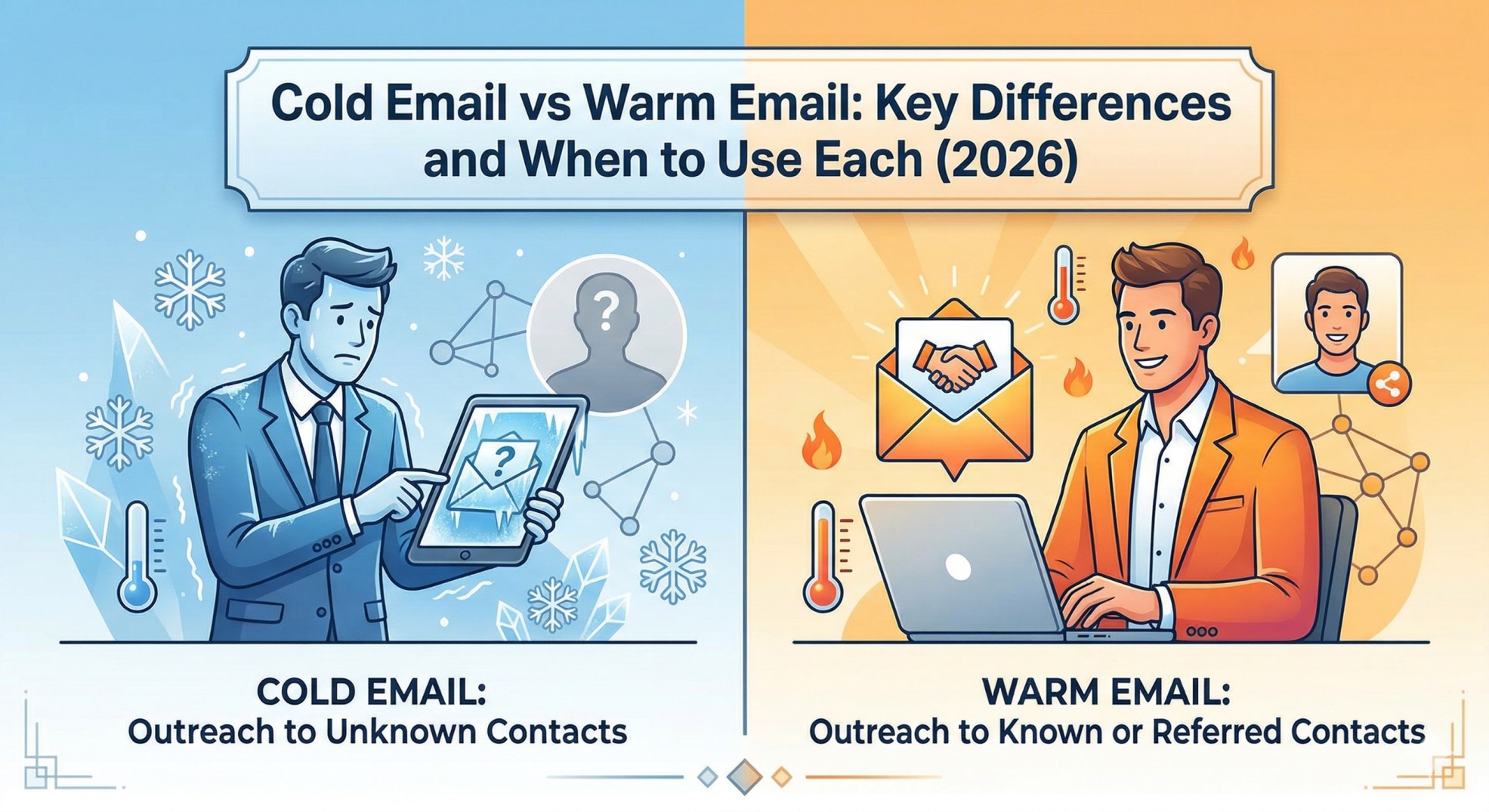
Email Copywriting for Cold Email vs. Marketing Email: The Key Differences
The same copywriting principles apply to both cold email and marketing email — but the application differs significantly based on the relationship, the context, and the goal.
Dimension Cold Email Copywriting Marketing Email Copywriting Relationship No prior relationship — must earn attention from zero Existing subscriber — some trust already established Length 50–100 words maximum 150–400 words typical Tone Personal, one-to-one, conversational Brand voice — can be warmer, more polished Personalization Individual-level — researched, specific Segment-level — dynamic content, behavioral triggers CTA Single soft ask ("15 minutes?") Can be more direct ("Buy now," "Download free") Formatting Plain text or near-plain text Can use HTML, images, branded design Goal Start a conversation Drive a specific action (click, purchase, signup) Subject line tone Personal, specific, curiosity-driven Can be more promotional Social proof One specific, close-match proof point Can include multiple testimonials, logos
The most common copywriting mistake is applying marketing email conventions to cold email — and vice versa. Marketing email formatted like cold email looks amateurish. Cold email formatted like marketing email gets treated as mass broadcast and lands in spam.
For the complete cold email copywriting framework with before/after rewrites specific to outbound prospecting, read our how to write a cold email guide.
AI-Assisted Email Copywriting: The 2026 Workflow
AI prompts for first drafts save 40% of copywriting time. But the teams producing the best email copy in 2026 are not replacing human judgment with AI — they are using AI to accelerate research and first drafts while keeping human strategy, specificity, and review at the center.
The Human-AI Email Copywriting Workflow
Step 1: STRATEGY (Human)
Define the goal, audience segment, psychological trigger,
framework, and success metrics for this email.
AI cannot do this — it requires context and judgment.
Step 2: RESEARCH (AI-Assisted)
Use AI to research the recipient's company, pain points,
recent news, and competitive landscape.
AI produces the raw material; human selects what matters.
Step 3: FIRST DRAFT (AI)
Prompt AI with: goal + recipient context + framework +
tone guidelines + word count constraint.
AI produces a structured first draft in seconds.
Step 4: HUMANIZE (Human)
Review for: specific details that only a human would know,
tone authenticity, strategic precision, and factual accuracy.
Replace any generic AI-sounding phrases with specific,
original, human language.
Step 5: TEST AND ITERATE (Human + AI)
A/B test variants. Analyze results.
Use AI to generate alternative subject lines or CTAs.
Human selects based on strategic alignment.
The companies that kept their best copywriters and gave them AI tools to work with are outperforming their competitors by significant margins. The winning formula is human strategy + AI speed, not AI replacement.
The Email Copywriting Metrics Dashboard
Great copy produces measurable results. These are the metrics that tell you whether your copy is working — and what to fix when it is not.
Metric What It Measures Good Benchmark Fix If... Open rate Subject line effectiveness 35–55% (cold); 20–30% (marketing) Below 20% → rewrite subject lines Click rate CTA and body copy effectiveness 2–5% (marketing) Below 2% → rewrite CTA or body Reply rate Full email effectiveness (cold) 5–15% Below 3% → rewrite opening + CTA Click-to-open rate Body copy quality (opened, then clicked) 10–15% Below 8% → body copy isn't delivering on subject line promise Conversion rate Email-to-desired-action rate 2–5% (marketing) Below 1% → CTA friction or landing page mismatch Unsubscribe rate List fit and content relevance Below 0.5% Above 1% → wrong audience or wrong content type Spam complaint rate Trust and relevance level Below 0.1% Above 0.1% → immediate content and targeting review
The Diagnostic Framework
High open rate + low click/reply rate: Your subject line is working but your body copy isn't. The reader opened, found the content underwhelming, and left. Fix: rewrite the opening line, sharpen the value proposition, simplify the CTA.
Low open rate + high conversion (for those who do open): Your subject line is under-performing but your content is strong. Fix: A/B test new subject lines while keeping the body copy.
Low open rate + low conversion: Systematic problem across subject line and body copy — or a deliverability issue routing emails to spam before they are seen. Check deliverability first, then copy.
For complete benchmarking data on cold email specifically, read our cold email open rates guide and cold email response rate guide.
Frequently Asked Questions About Email Copywriting
What is email copywriting?
Email copywriting is the craft of writing email content — subject lines, body copy, and calls to action — that compels recipients to open, read, and take a desired action. It applies principles of direct-response copywriting (persuasion, psychology, clarity) specifically to the email medium. Effective email copywriting differs from general writing in that every element serves a measurable conversion goal: an open, a click, a reply, or a purchase. Top-performing brands generate an average ROI of up to $45 for every $1 spent on email marketing — and the quality of the copy is the primary driver of that return.
What makes good email copy?
Good email copy passes four tests: (1) Clarity — the reader understands the message and the ask in under 10 seconds; (2) Relevance — the email speaks to a specific pain, goal, or situation the recipient is actually experiencing; (3) Credibility — the claims are supported by specific, verifiable proof; (4) Action — there is one clear, low-friction next step that moves the reader toward the desired outcome. Benefit-focused copy outperforms feature-focused copy by 3x. Personalized copy increases conversions by 42%. A single, clear CTA outperforms multiple CTAs on every measurable metric.
How long should email copy be?
Length depends on email type and context. Cold email body copy should be 50–100 words — short enough to read in 15 seconds on mobile. Marketing email body copy typically runs 150–300 words for promotional emails and up to 800 words for newsletters. The key principle: every word must earn its place. 73% of people skip reading full content and prefer short copies. If you can say it in 80 words, do not say it in 200.
What is the best email copywriting framework?
The AIDA framework (Attention → Interest → Desire → Action) is the most widely tested and consistently effective framework for email copy, improving response rates by 25%. For cold email specifically, the Before → After → Bridge framework is highly effective because it paints a vivid picture of transformation. For problem-focused outreach, PAS (Problem → Agitate → Solve) creates urgency. The best framework is the one you use consistently and test rigorously — frameworks are starting points, not finished products.
How do I write a subject line that gets opened?
Write subject lines that are: under 50 characters (mobile-optimized), specific to the recipient or situation, free of promotional language and spam trigger words, and either curiosity-driven or personalized. Subject lines with numbers boost open rates by 20%. Personalized subject lines significantly outperform generic ones. Strategic copywriting can increase email open rates by up to 50% through subject line optimization alone. A/B test subject lines on every campaign — a 40% CTR improvement is typical when testing reveals the right format for your specific audience.
Should I use AI for email copywriting?
Yes — as an accelerator, not a replacement. AI prompts for first drafts save 40% of copywriting time, and AI is highly effective for research, generating alternatives, and drafting structured first drafts within defined frameworks. However, companies that replaced human copywriters with AI between 2023 and 2025 saw measurable conversion rate declines as their copy became indistinguishable from competitors. The winning approach in 2026: human strategy and review + AI speed and scale. Use AI to draft, humans to strategize, refine, and personalize with specific details that AI cannot supply.
What is the difference between cold email copywriting and marketing email copywriting?
Cold email copywriting targets people with no prior relationship — it must earn attention from zero, be under 100 words, read like a personal message, and ask for a small, low-commitment next step. Marketing email copywriting targets existing subscribers — it benefits from established trust, can use branded HTML formatting, can be 150–400 words, and can make more direct purchase or conversion asks. The psychological principles are the same (benefits over features, social proof, clear CTA), but the length, format, tone, and CTA style differ significantly between the two contexts.
The Bottom Line
Email copywriting is the highest-leverage writing skill in B2B marketing. Every email you send is a test of your ability to earn attention, build credibility, create desire, and compel action — in a medium where the average reader makes the read/delete decision in three seconds.
The data is unambiguous: benefit-focused copy produces 3x higher conversions. Personalization adds 42%. A clear CTA adds 220%. These are not marginal improvements — they are the systematic result of applying psychological principles and copywriting craft to a medium with a $45 average ROI per dollar spent.
The good news: these principles are learnable. The frameworks are proven. The before/after examples make the gap visible.
Write clearly. Write for the reader. Lead with benefits. Prove with specifics. Ask for one thing. Test everything.
The rest is iteration.
Turn great copy into a complete outbound system: learn how to write a cold email from scratch, write subject lines that earn every open, use our cold email templates as your starting framework, master cold email personalization that makes every email feel individual, build follow-up sequences that keep prospects engaged, measure your cold email response rate against real benchmarks, track open rates to know when copy needs work, and build email into your full B2B lead generation strategy. Write better. Convert more. Start at mailfra.com.
Comments(0)
Loading comments...